
Wedding planning · Faridabad
Wedding Planner in Sector 19, Faridabad
Plan a wedding in Sector 19 through one connected brief for venue, guests, décor, hospitality, production, suppliers and event-day execution. The planning approach is locality-aware without inventing a local branch, fixed package or one-size-fits-all venue assumption.
Established central Faridabad · serviceability confirmed through the Delhi NCR coverage model

Local planning lens · Established central Faridabad
Use the locality as a routing clue—not as a substitute for a wedding brief for Faridabad
The useful question for Sector 19 is not whether a wedding planner can repeat a generic city paragraph; it is what the actual celebration needs in this part of Faridabad. Start by recording where each function will happen, whether guests are staying nearby or travelling across Delhi NCR, and which suppliers need early or late access. In this established central Faridabad planning context, one deliberately chosen checkpoint is baraat route, groom entry and guest-entry timing. That checkpoint may prove important or irrelevant after the venue is confirmed, which is exactly why the page avoids making unsupported locality claims. The planning team should verify site-specific rules directly and then connect them to hospitality, décor, catering, photography, entertainment and production. Locality information is therefore used to route the enquiry and frame decisions, not to manufacture a fake local presence.

Quotation logic
Separate budget priorities from optional visual upgrades
Budget control for Sector 19 begins with priorities, not packages. Decide which guest or design outcomes matter most, allocate guardrails to major categories and maintain a contingency rather than committing every rupee during early inspiration. One variable to review on this page is baraat route, groom entry and guest-entry timing; if it affects transport, staffing, equipment or venue work, the estimate should show that connection. Written scopes are essential because wedding proposals can look comparable while covering very different responsibilities. The planner should record deposits, milestone payments, change orders and settlement dates beside the master budget so cash flow and approvals stay visible. No locality page can responsibly promise a fixed amount without the wedding facts, which is why the final commercial conversation must remain quotation-led.
Guest journey
Design every arrival, transition and departure deliberately
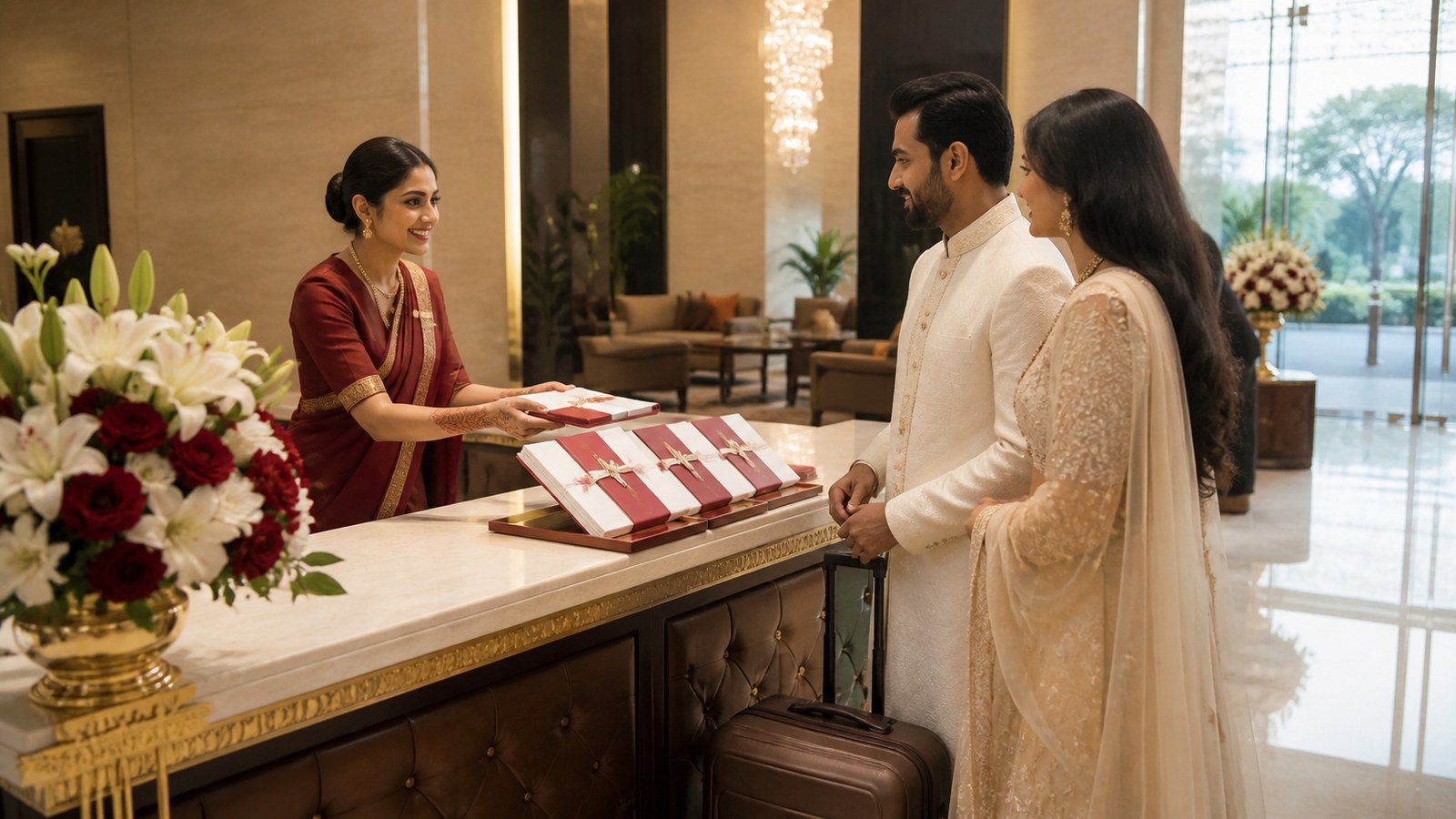
The best test of a Sector 19 wedding schedule is whether guests can follow it without repeatedly calling the family. Build communication around real decisions: venue address, reporting time, transport point, dress or ceremony notes where needed, meal timing and the contact channel for changes. Then review baraat route, groom entry and guest-entry timing, because it can affect comfort or punctuality even when the creative plan looks complete. If some guests are based elsewhere in Faridabad, provide separate transport logic instead of one universal message. Rooming lists, shuttle manifests and RSVP counts should reconcile before the final week. The planner’s goal is not to create more messages; it is to reduce uncertainty at each transition so the couple and family can remain present at the celebration rather than operating a helpdesk themselves.
Event-day operations
Map dependencies before the first vendor loads in
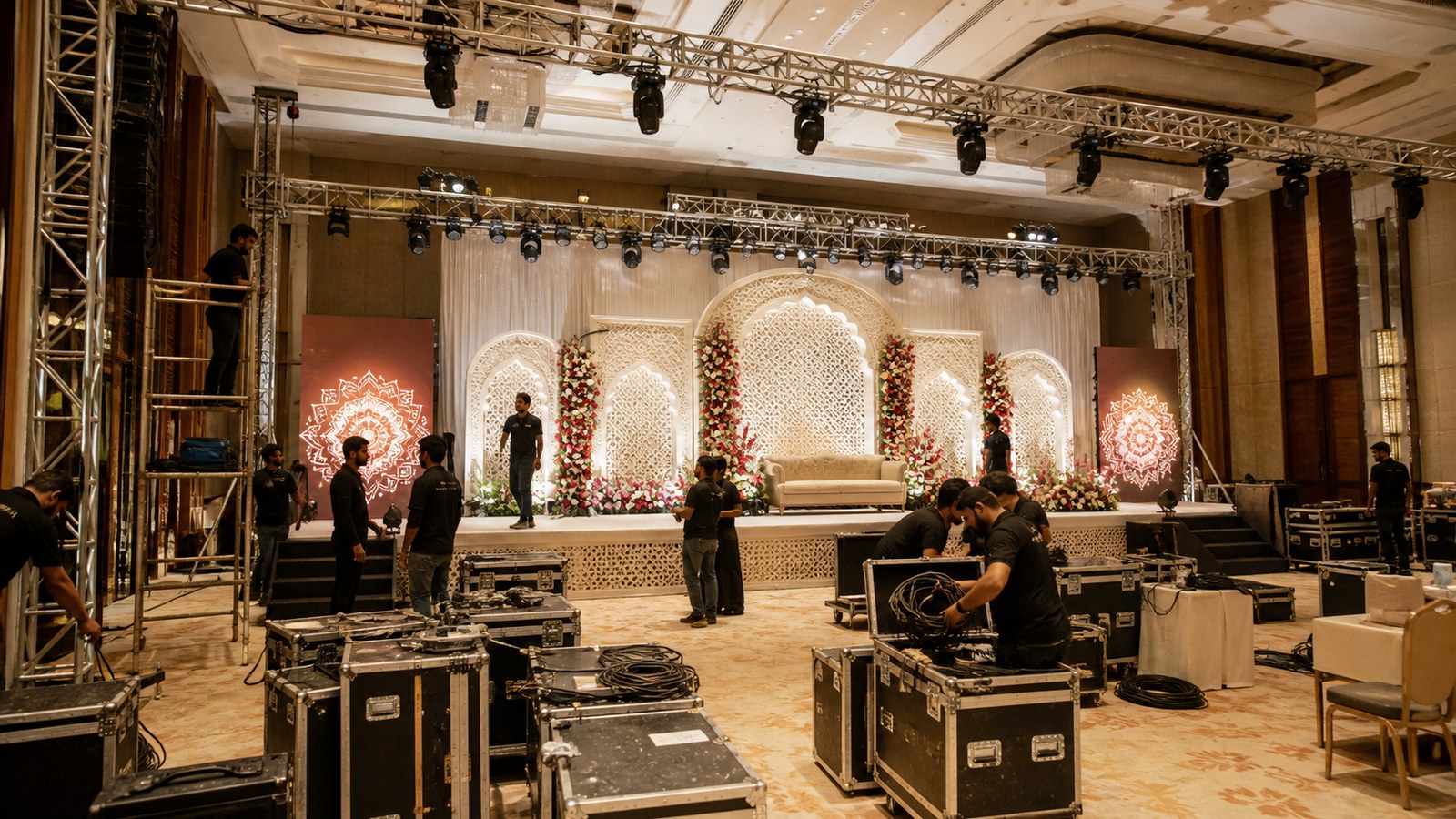
Event-day control in Sector 19 should be built backwards from the moments that cannot move easily: venue access, ceremony windows, artist calls, meal readiness, curfew or handover restrictions where applicable. Around those anchors, place supplier setup, family readiness, photography, guest arrivals and transitions. Add baraat route, groom entry and guest-entry timing to the pre-event checklist so the team knows whether it needs a cue, backup or dedicated owner. The planner should use one master timeline plus role-specific call sheets, not several contradictory versions. Change logs matter in the final days because a five-minute adjustment can affect transport, kitchen timing or stage programming. The purpose of this system is invisible control: guests see a celebration that flows, while the team sees the dependencies and knows exactly who must respond when something changes.
Creative direction
Build one visual language across very different functions
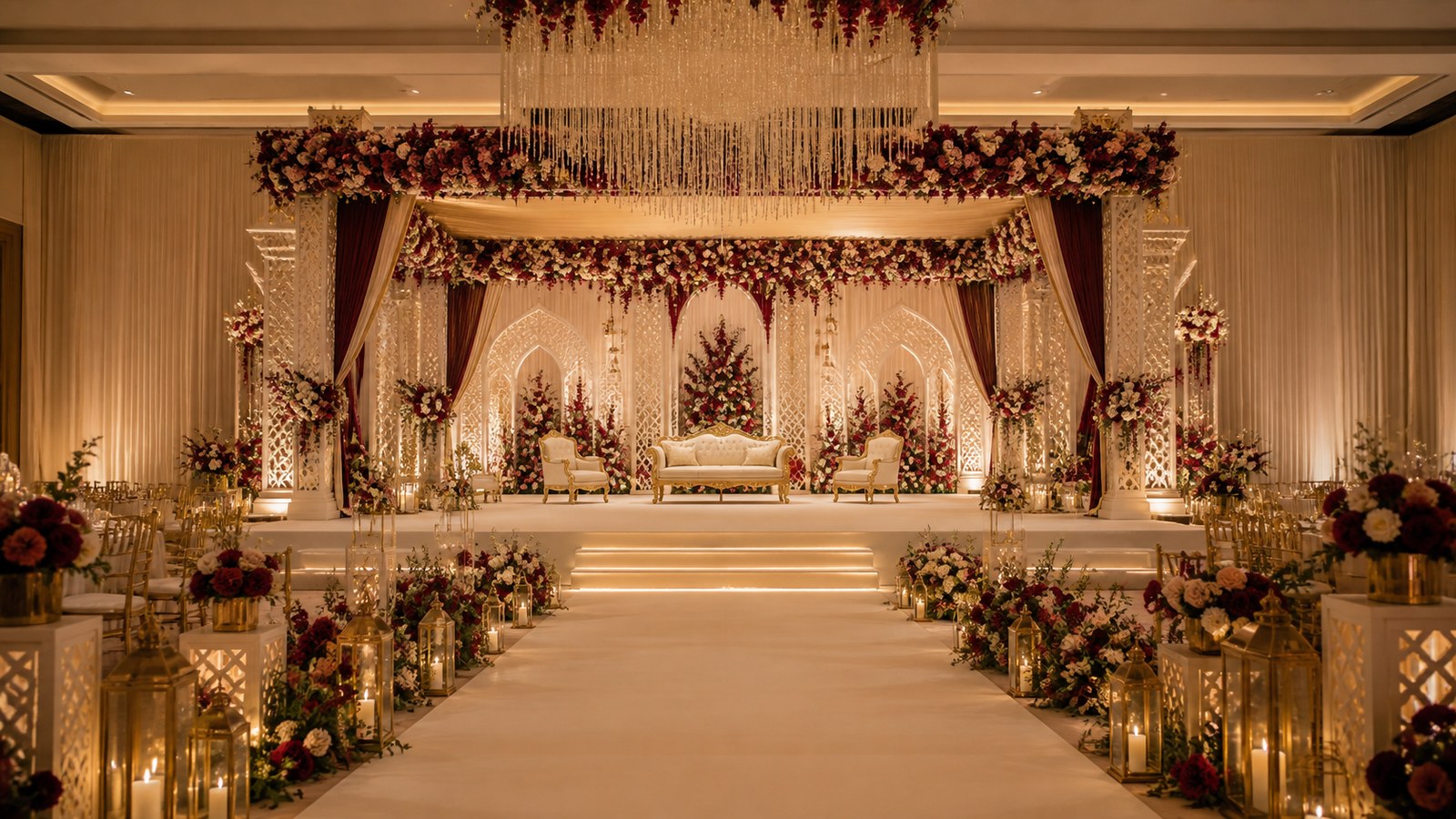
A strong Sector 19 wedding should look intentionally designed rather than decorated in unrelated layers. Start with hierarchy: which function is visually richest, which is intimate, where the couple’s story appears and which details can repeat as a recognizable identity. Then connect that hierarchy to practical questions, including baraat route, groom entry and guest-entry timing. Mood boards should be followed by spatial sketches, stage or mandap dimensions where relevant, floral/material decisions, lighting coordination and installation notes. If the venue has restrictions, the creative team should adapt before fabrication begins. The same thinking applies to invitations, menus, welcome signage, photo areas and entertainment backdrops. Visual consistency is valuable because it helps guests read the celebration as one journey, but each function should still have enough contrast to feel like a new chapter.
Design-led planning
Freeze the inputs that shape every downstream wedding decision
For Sector 19, write the wedding brief as an operating document rather than a mood-board summary. Record what must happen, where it happens, who approves it, who supplies it and by what date the next team needs the answer. The brief should also test baraat route, groom entry and guest-entry timing, because small logistics can become major event-day bottlenecks when they are not assigned early. Separate confirmed facts from preferences: confirmed venue timings and guest counts should not sit in the same status as inspiration images or optional entertainment ideas. This distinction protects both creativity and budget. It lets the planner tell vendors which items can be priced now, which require a site visit or tasting, and which should wait. The final brief becomes the foundation for timelines, call sheets, hospitality communication and the family’s decision tracker.
Explore the Faridabad planning network
Connect this locality to the city hub without pretending it is a branch
Many Delhi NCR weddings cross more than one neighbourhood because guests may stay in one area, a family function may happen in another and the main venue may sit elsewhere. From Sector 19, the useful adjacent planning references are Sector 18 and Sector 21A, plus the broader Faridabad hub. Those links should be used to think about movements and timelines, not to infer that every named area has a Kontact Us branch. The enquiry form records the originating locality so the first conversation can start with context, but the team still needs the actual venue and dates before confirming availability or scope. That distinction keeps the location architecture helpful to users and safer for search quality than publishing identical “near me” pages with unsupported local claims.
Enquiry
Tell us what you are planning
Share the essentials first. We use a Submission ID so your WhatsApp confirmation can be matched to the form record.
- No package price is assumed before scope is understood.
- Destination requests outside Delhi, Gurugram, Noida and Faridabad are confirmed individually before scope is committed.
- After submission, WhatsApp opens so you can confirm the enquiry directly.