
Wedding planning · Delhi
Wedding Planner in Saket, Delhi
Plan a wedding in Saket through one connected brief for venue, guests, décor, hospitality, production, suppliers and event-day execution. The planning approach is locality-aware without inventing a local branch, fixed package or one-size-fits-all venue assumption.
South Delhi · serviceability confirmed through the Delhi NCR coverage model

Local planning lens · South Delhi
Use the locality as a routing clue—not as a substitute for a wedding brief for Delhi
The useful question for Saket is not whether a wedding planner can repeat a generic city paragraph; it is what the actual celebration needs in this part of Delhi. Start by recording where each function will happen, whether guests are staying nearby or travelling across Delhi NCR, and which suppliers need early or late access. In this South Delhi network planning context, one deliberately chosen checkpoint is stage, LED, audio and backup-power readiness. That checkpoint may prove important or irrelevant after the venue is confirmed, which is exactly why the page avoids making unsupported locality claims. The planning team should verify site-specific rules directly and then connect them to hospitality, décor, catering, photography, entertainment and production. Locality information is therefore used to route the enquiry and frame decisions, not to manufacture a fake local presence.

Creative direction
Build one visual language across very different functions
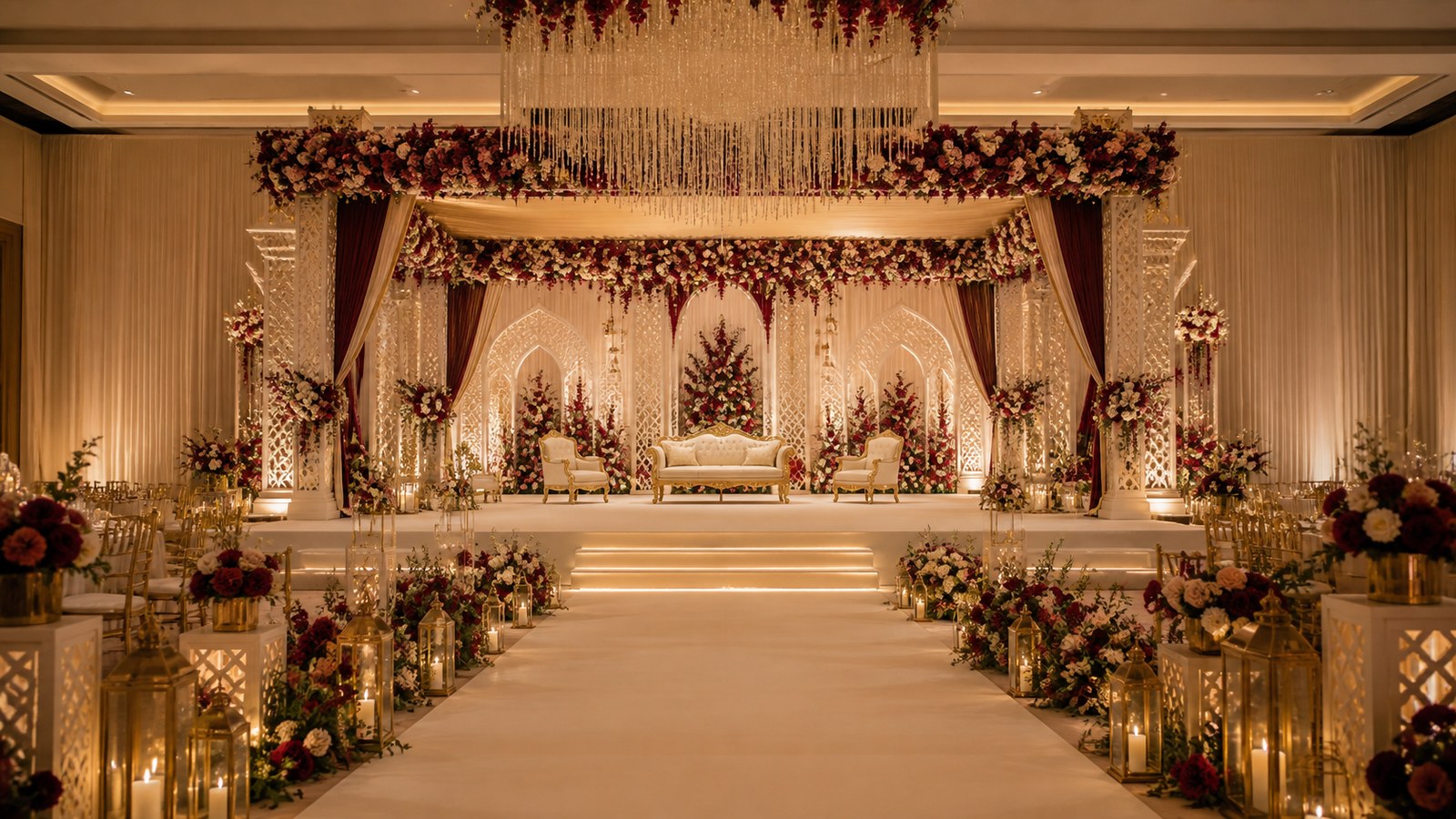
A strong Saket wedding should look intentionally designed rather than decorated in unrelated layers. Start with hierarchy: which function is visually richest, which is intimate, where the couple’s story appears and which details can repeat as a recognizable identity. Then connect that hierarchy to practical questions, including stage, LED, audio and backup-power readiness. Mood boards should be followed by spatial sketches, stage or mandap dimensions where relevant, floral/material decisions, lighting coordination and installation notes. If the venue has restrictions, the creative team should adapt before fabrication begins. The same thinking applies to invitations, menus, welcome signage, photo areas and entertainment backdrops. Visual consistency is valuable because it helps guests read the celebration as one journey, but each function should still have enough contrast to feel like a new chapter.
Design-led planning
Freeze the inputs that shape every downstream wedding decision
Before collecting proposals for a Saket celebration, build one decision sheet that all suppliers can understand. It should name every function, venue/address, target guest count, likely start/end time, ceremony requirements, hospitality expectations, design direction and any hard commercial limits. Include stage, LED, audio and backup-power readiness as one of the early planning tests. Then identify dependencies: a venue decision may affect production, a guest-count revision may affect catering and transport, an artist rider may affect stage and sound, and a ceremony change may alter photography and meal timing. The planner should not hide those links inside meeting notes. They belong in the brief so late changes can be evaluated against the whole wedding. This is also the right place to record exclusions and responsibilities that remain with the venue or family.
Quotation logic
Separate budget priorities from optional visual upgrades
A Saket wedding should not be assigned a price merely because the locality name sounds premium. The quotation needs the actual number of functions, venue status, guest counts, service scope, design ambition, production requirements, hospitality depth, travel and staffing. The planning brief should also identify whether stage, LED, audio and backup-power readiness creates an additional cost driver or simply needs better coordination. Families can compare proposals more intelligently when every vendor prices the same responsibility: equipment, crew, setup/strike, transport, taxes, trials, rehearsals, permits or deliverables should be visible where relevant. Optional experience upgrades can then be separated from core operational needs. This protects contingency and prevents a low headline price from becoming expensive later because important elements were excluded from the original scope.
Guest journey
Design every arrival, transition and departure deliberately
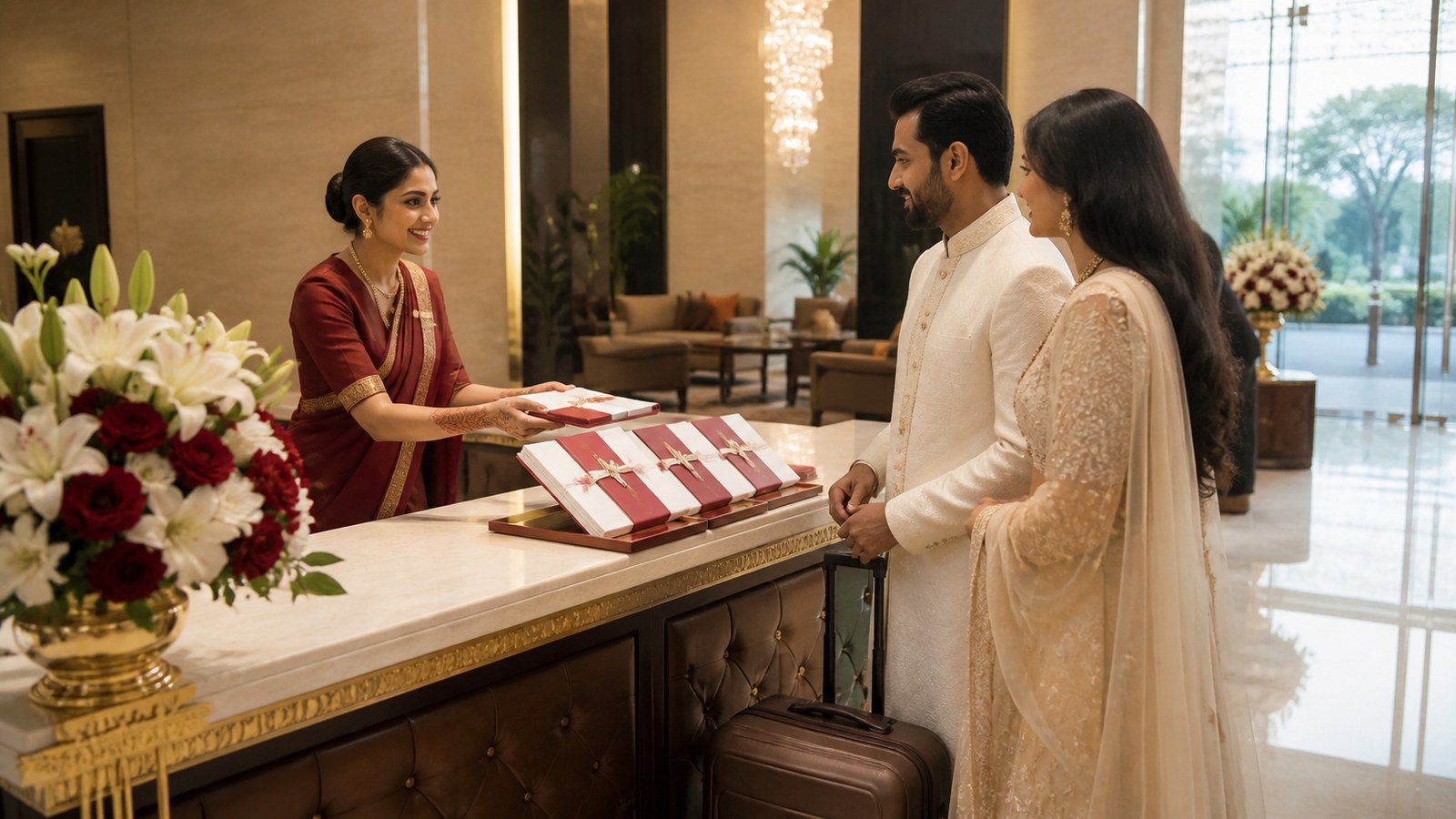
Read the Saket plan as though you are an outstation guest receiving only the official wedding communication. Can you tell where to arrive, what transport is arranged, how much buffer exists between functions and whom to contact if plans change? That exercise often exposes more than another supplier meeting. The guest journey should connect RSVP status, hotel or home base, welcome information, function-wise transport, seating or special assistance and final departure. For this page, stage, LED, audio and backup-power readiness is the extra stress test. Guests moving between Saket, Safdarjung Development Area, Chhatarpur or another Delhi NCR area should not depend on optimistic travel assumptions. The same journey map also helps catering, photography and production because their timing depends on when people actually reach the venue, not only the printed invitation time.
Event-day operations
Map dependencies before the first vendor loads in
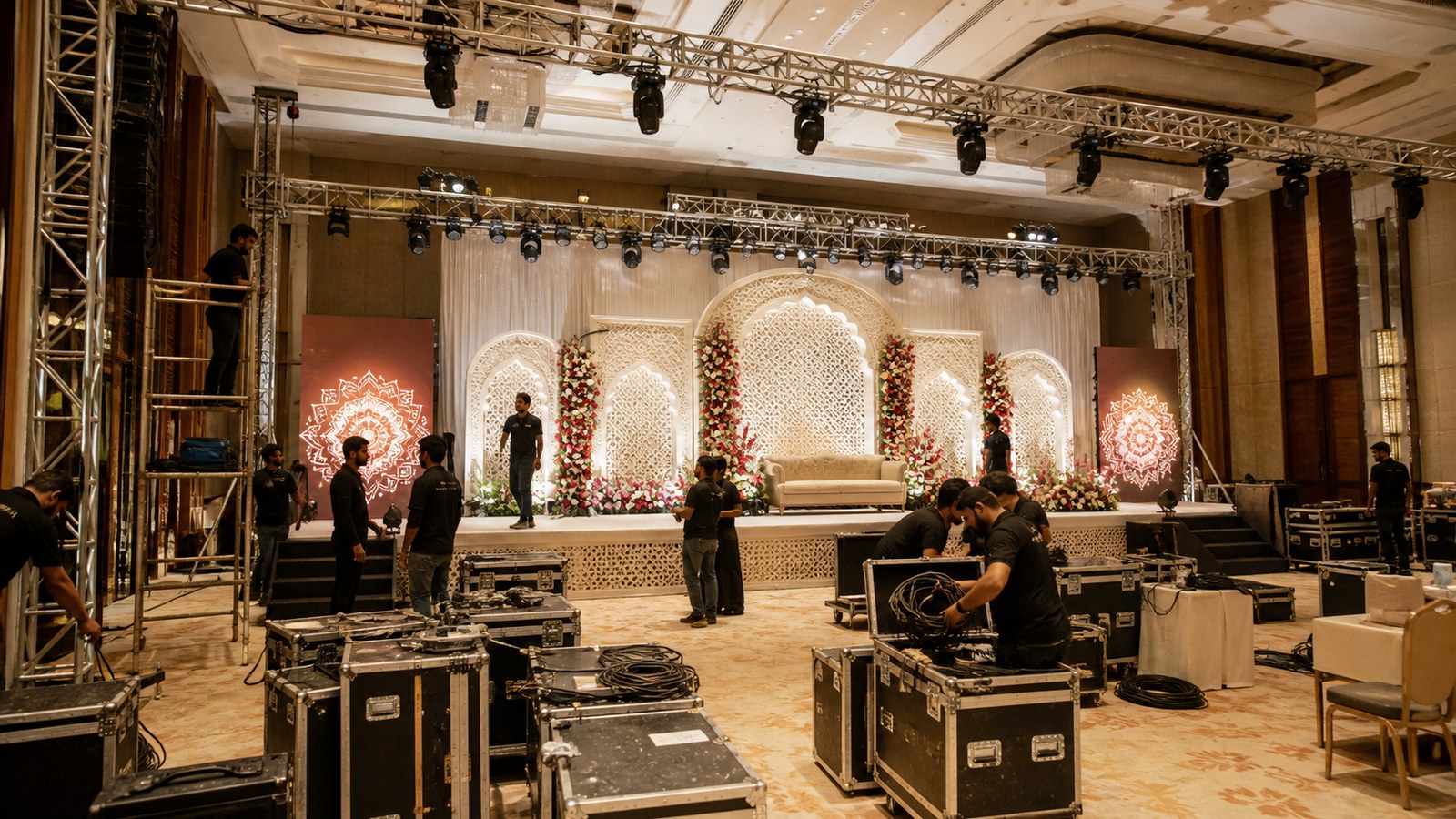
The run-of-show for Saket should translate every approved decision into time, owner and dependency. Vendor access, décor handover, technical setup, artist soundcheck, family rehearsal, portrait windows, guest arrival, ceremony cues, food service and departure should not be maintained as separate timelines that only meet on event day. This page makes stage, LED, audio and backup-power readiness a dedicated operational checkpoint. If any movement extends toward Safdarjung Development Area, Chhatarpur or another part of Delhi, the dispatch sheet should include realistic buffers and named contacts. The command team also needs authority rules: who can approve a delay, substitute an item, change an entry cue or communicate with guests? A good timeline is not rigid; it is a controlled model with enough information to make sensible changes without losing the rest of the wedding.
Explore the Delhi planning network
Connect this locality to the city hub without pretending it is a branch
Use the locality network as a planning map. The current page covers Saket; nearby navigation points include Safdarjung Development Area and Chhatarpur, while the Delhi hub brings all 30 requested premium or established areas together. A couple comparing several venues can use those pages to keep each address attached to the same planning questions: guest movement, supplier access, venue rules, production feasibility and quotation inputs. The network intentionally reuses shared service imagery rather than pretending to show real projects in every locality. If a future verified project, review or photograph supplied by the business is verified for a specific area, it can be added with provenance; until then, local trust must come from truthful serviceability and useful planning information rather than fabricated evidence.
Enquiry
Tell us what you are planning
Share the essentials first. We use a Submission ID so your WhatsApp confirmation can be matched to the form record.
- No package price is assumed before scope is understood.
- Destination requests outside Delhi, Gurugram, Noida and Faridabad are confirmed individually before scope is committed.
- After submission, WhatsApp opens so you can confirm the enquiry directly.